|
||||||
|
||||||
| Homes for Sale | Photo Gallery | Bungalow Architecture | Bungalow Resources | About Us | Contact | |
| Architecture | Restoration | Miner Smith |
Bungalow Architecture
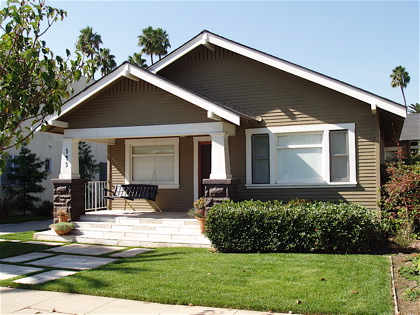
The bungalow actually traces its origins to the Indian province of Bengal. The native thatched roof huts were adapted by the British, who built bungalows as houses for administrators and as summer retreats. Refined and popularized in California, the first California house dubbed a bungalow was designed by the San Francisco architect A. Page Brown in the early 1890s. Characteristics of a BungalowInfluenced by the Arts and Crafts movement, bungalow architecture emphasizes a horizontal link between the house and the land around it. The use of natural, local materials and colors also reinforce this home-earth relationship. California Bungalows are commonly seen with Craftsman lines or in a Spanish Colonial motif. Bungalow features:
Bungalow StylesCalifornia bungalows are commonly seen with Craftsman lines or in a Spanish Colonial motif, but many surprising variations of bungalows exist, such as:
Please visit the Cal Bungalow Photo Gallery page to browse through many of these styles. In addition, the Historic District Preservation Plan for the Anaheim Colony contains photos of a variety of architectural styles. You can download the plan here. Color SchemesHistorically appropriate paint colors honor the authenticity of the architectural style of a home. Nature inspired tones of browns and greens are typical of a Craftsman bungalow. Spanish and mission style homes are typically white, off-white or a light brown hue. Trim is painted with contrasting paint color to accent the architectural details. Download the Historic Appropriate Paint Colors guideline from the City of Long Beach. Interior and Exterior FeaturesBungalows have a simple living room with the focal point being the fireplace, and a smaller kitchen. The living room often has a broad opening into the dining room. Built-in furniture such as sideboards, bookshelves, and window seats were common throughout the house. Wood was commonly used for flooring, wainscoting, chair rails, and geometric ceiling patterns. Stained and leaded glass was often used for windows and cabinet doors. Artisan light fixtures were also common. Bungalow exteriors tend to be wood shingle, horizontal siding or stucco exteriors, as well as brick or stone exterior chimneys and a partial-width front porch. Larger bungalows might have asymmetrical "L" shaped porches. Bungalow NeighborhoodsBungalows can be found in the older neighborhoods of most American cities. Many cities have what is called a "Bungalow Belt" of homes built in the 1920s, often clustered along streetcar lines as they extended into the suburbs. Examples of Southern California neighborhoods with a high concentration of bungalows include Belmont Heights and Bluff Heights in Long Beach, Old Towne Orange, and Bungalow Heaven in Pasadena. Bungalow and Craftsman Historic Districts
Craftsman Revival
|
|
CalBungalow.com — SoCal Modern™ Group Copyright © 2007-2017. All Rights Reserved. info@calbungalow.com |
Rochelle Kramer DRE #01392260 Remax Real Estate Specialists 949-861-1008 |